
Light Therapy Support (PBM)
Gentle, non-invasive light-based support that may be used as part of an individualised BodyLink plan.
Based in Silverdale, Auckland. Calm, non-invasive support.
Photobiomodulation (PBM), sometimes referred to as red and infrared light therapy, uses specific wavelengths of light delivered in a controlled, non-invasive way.
At BodyLink, PBM may be used as a supportive modality where it is relevant to the individual. If we recommend it for you or your child, we’ll explain why it is being considered, what the session involves and how it fits alongside the other support you may be receiving.


PBM stands for Photobiomodulation
Photobiomodulation is a non-invasive form of light therapy that uses specific wavelengths of red and near-infrared light.
At a cellular level, this light can interact with photoacceptors within the body, including those associated with the mitochondria — the structures involved in cellular energy production. This interaction can influence cellular signalling and the way cells respond to stress and recovery.
PBM has been studied across a range of health and rehabilitation settings, including areas such as pain, inflammation and tissue recovery.
The evidence varies depending on the condition and treatment protocol, which is why PBM needs to be used appropriately rather than as a one-size-fits-all therapy.
At BodyLink, we keep it practical. If PBM is relevant for you or your child, we’ll explain why it is being considered, what the session involves and how it fits with the support you are receiving.
Why BodyLink uses PBM
At BodyLink, we look at the wider brain–body picture and consider how the nervous system is managing everyday demands.
For some people, PBM may be used as an additional supportive modality alongside other BodyLink services. The aim is not to add more for the sake of it, but to choose support that is appropriate for the individual and their current needs.
We may consider PBM because it is:
- gentle and non-invasive
- suitable for children, teens and adults when appropriate
- easy to incorporate alongside other BodyLink support
- delivered using controlled red and near-infrared light
- supported by research across a range of health and rehabilitation settings
PBM is not automatically included in every plan. If we think it may be relevant for you or your child, we’ll explain why we’re considering it and how it may fit with the other support you are receiving.
The focus is always on choosing the right support for the individual — not simply adding more treatments.
When PBM may be considered
If you’re specifically interested in PBM, get in touch and tell us what you’re hoping to support. We can discuss whether PBM may be appropriate for you or your child and, where relevant, how it could fit alongside other BodyLink support.
PBM is not used in exactly the same way for everyone. If we believe it may be relevant for you or your child, we’ll explain why it is being considered, what the session involves and how it fits with the rest of your support.
PBM may be considered as part of an individualised support plan across a range of developmental, nervous system, recovery and wellbeing needs.
Children and developmental support
Depending on the individual child, PBM may be considered where support is being explored around:
- attention, focus and learning
- sensory processing and regulation
- emotional regulation or heightened reactivity
- sleep and recovery
- nervous system regulation and developmental support alongside other therapies
- recovery following illness or periods of persistent fatigue
Regulation and nervous system load
PBM may also be considered when someone is experiencing:
- feeling constantly “on”, wired or overwhelmed
- difficulty winding down or switching off
- reduced resilience under ongoing stress
- difficulty recovering after periods of increased physical or emotional demand
Recovery and general wellbeing
For children, teens and adults, PBM may form part of a broader support plan focused on:
- feeling run down or under persistent load
- energy and day-to-day capacity
- recovery and overall resilience
- supporting regulation and general wellbeing over time
What a session is like
If PBM is included in your care plan, we’ll make sure you understand:
- why it's included
- how it fits with your overall goals
- what we're looking for over time
PBM sessions are designed to be calm, comfortable and non-invasive.
A typical session includes:
- a brief check-in about how you’re going and any changes since your last visit
- positioning the device according to the area and purpose being supported
- a quiet, supported treatment environment
- adjustments to the plan over time based on your individual needs and response
If PBM is included in your support plan, we’ll make sure you understand:
- why it has been recommended
- how it fits with your overall goals
- what we’re looking for and monitoring over time
At BodyLink’s Silverdale clinic, PBM is delivered using a professional photobiomodulation device that provides targeted wavelengths of red and near-infrared light. The device is compact and handheld, allowing light to be applied to specific areas in a controlled way.
PBM does not involve injections or invasive procedures, and sessions are generally straightforward and easy to incorporate into a wider support plan. For children, we take care to keep the experience calm,
age-appropriate and comfortable.
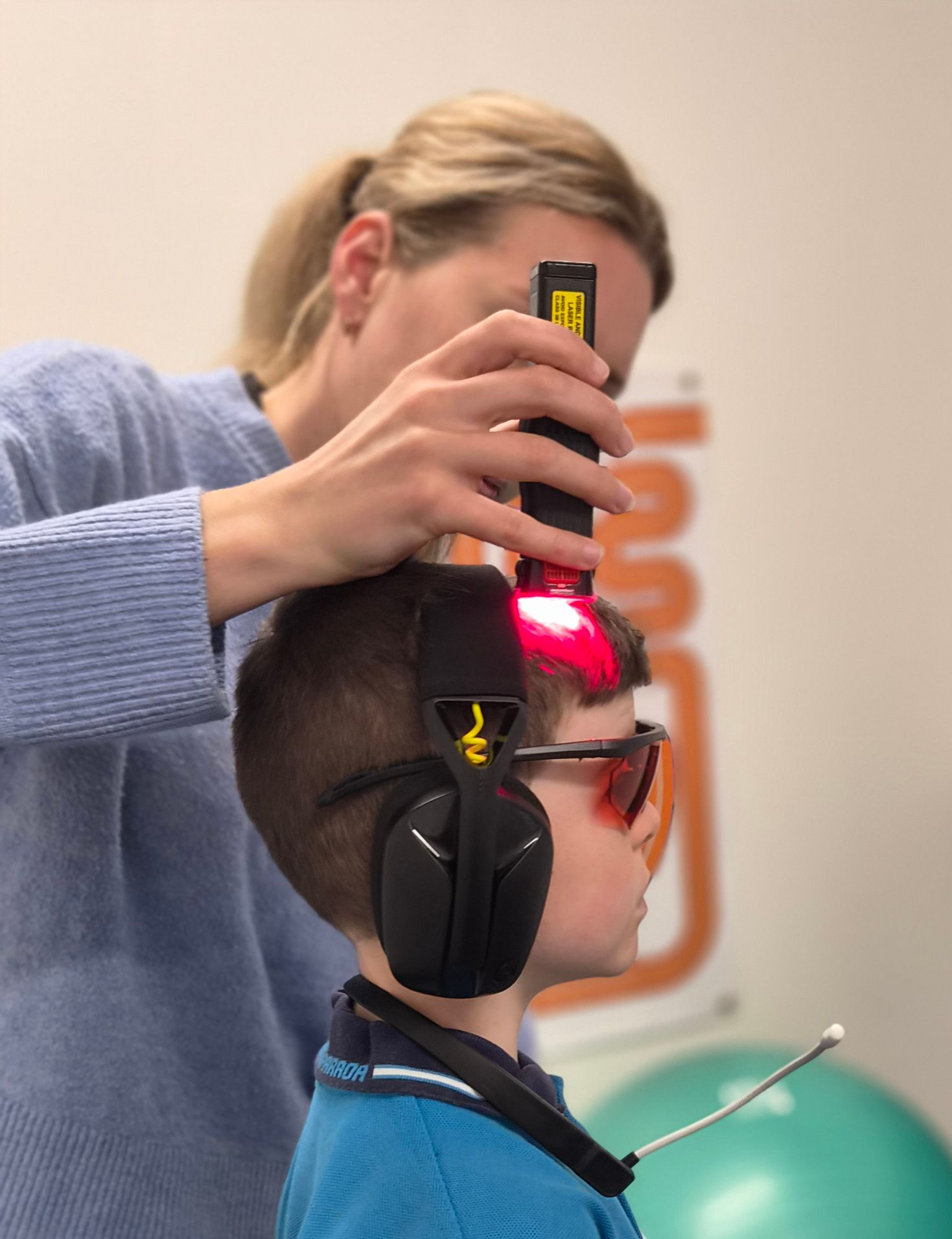
What happens before PBM treatment
If you’re interested in PBM, get in touch and tell us a little about what you’re hoping to support. We can discuss whether PBM may be relevant for you or your child and how it could fit alongside other BodyLink support.
If PBM is recommended, we’ll take the time to understand your current needs and determine how the therapy may be used appropriately within your plan.
We’ll:
- review what you’re currently experiencing and what you’re hoping to support
- consider the most appropriate areas and approach for PBM
- explain how the device works and what the session will involve
- talk through what you may feel during treatment and what to expect afterwards
- answer any questions before we begin
If PBM is recommended, we’ll explain how it fits into your overall support plan and what the next steps may look like.
How to get started
1
Contact us about PBM
Interested in PBM or wondering whether it may be relevant for you or your child? Get in touch and tell us what you’re hoping to support. We can discuss whether PBM may be appropriate and how it could fit alongside other BodyLink support.
2
Come in for your PBM session in Silverdale
If PBM is appropriate, we’ll explain how the device is being used, the areas being targeted and what to expect during the session. We keep the process calm, comfortable and straightforward.
3
Review and next steps
We’ll review how things are going over time and adjust the approach where appropriate. If further PBM sessions or other support are recommended, we’ll explain why and what the next steps may look like.
Frequently Asked Questions
Can I book PBM directly?
PBM is generally used as a supportive modality within a broader BodyLink plan rather than as a standalone starting point.
If you’re specifically interested in PBM, get in touch and tell us what you’re hoping to support.
We can discuss whether it may be appropriate for you or your child and how it could fit alongside other BodyLink support.
What is the difference between PBM and red light therapy?
Red light therapy is a broad term commonly used for treatments and consumer devices that use red or near-infrared light.
Photobiomodulation (PBM) is the more precise scientific term for the controlled use of specific wavelengths of light to influence biological activity. PBM can be delivered using lasers or LED devices, and factors such as wavelength, dose, intensity, treatment time and the area being treated all influence how the light is used.
At BodyLink, PBM is applied using professional equipment and an individualised approach rather than a general-purpose consumer light device.
Is it invasive or painful?
PBM is non-invasive and is generally well tolerated. The light is applied to targeted areas using a handheld device, and most people experience little to no sensation during treatment. We’ll explain what to expect before your session and make sure you or your child are comfortable throughout.
Is it suitable for children and adults?
Yes. PBM can be used with both children and adults when it is appropriate for the individual. At BodyLink, we regularly use PBM with children as well as adults, and we adjust the approach based on age, comfort, individual needs and how the person responds.
For children who are sensory-sensitive or new to PBM, we take extra care to keep the experience calm, gradual and comfortable.
Do you diagnose medical conditions?
No. BodyLink does not diagnose medical conditions.
Our services provide non-invasive wellbeing and developmental support and are not a substitute for medical diagnosis, emergency care or treatment from your registered healthcare provider.
How does PBM actually work?
PBM uses specific wavelengths of red and near-infrared light that can be absorbed by light-sensitive molecules within our cells. One of the best-studied targets is cytochrome c oxidase, an enzyme within the mitochondria — the structures responsible for producing much of the energy our cells use.
When these cellular photoacceptors interact with light, PBM can influence mitochondrial activity and cellular signalling. Research has shown changes in ATP production (the cell’s main energy currency), nitric oxide, reactive oxygen species and calcium signalling. These processes can influence how cells respond to stress, inflammation and recovery.
Importantly, PBM is dose-dependent. Wavelength, intensity, treatment time, power and the area being treated all matter, which is one reason professionally applied PBM is different from simply using a general red-light product.
How many sessions will we need?
The number and frequency of PBM sessions will vary depending on what is being supported, the treatment approach and how you or your child responds over time.
If PBM is recommended, we’ll explain the suggested frequency and timeframe and review progress regularly, adjusting the plan where appropriate.
Where can I learn more about PBM from an expert?
A great starting point is the work of Dr Josh Madsen, whose content on photobiomodulation is widely followed by families navigating neurodevelopmental challenges. Both Michelle and Janelle have completed Dr Josh's practitioner course. Learn more about his work.
Where is BodyLink located and do you see clients from outside Auckland?
BodyLink is based in Silverdale, north Auckland, and we see clients from across the wider Auckland region. We also have families who travel from further afield.
If you’re based outside Auckland and are interested in PBM or another BodyLink service, get in touch and we can discuss what may be practical for you.